TRUE CRIME ATLAS

Lindbergh Kidnapping

Published October 26, 2026Updated October 28, 2026
SolvedVisual case overview

A missing child · a traced ransom · a contested reconstruction

The money trail that led from a nursery to a courtroom

A $50,000 ransom payment led investigators to Bruno Richard Hauptmann through numbered banknotes. The prosecution also presented ladder-wood comparisons, handwriting opinions and witness identifications at his 1935 trial.

Read the full case overview

On March 1, 1932, 20-month-old Charles Augustus Lindbergh Jr. was abducted from his nursery at Highfields, his parents’ New Jersey estate. Ransom letters led to a $50,000 payment, but the child was not returned. His remains were discovered near Mount Rose on May 12. Investigators traced numbered banknotes to Bronx carpenter Bruno Richard Hauptmann and recovered ransom money from his garage. Prosecutors also presented ladder-wood comparisons, handwriting opinions and witness identifications. Hauptmann was convicted of first-degree murder in 1935 and executed in 1936 after unsuccessful appeals. A New Jersey appellate court denied a researcher’s proposed DNA-sampling request in 2024.

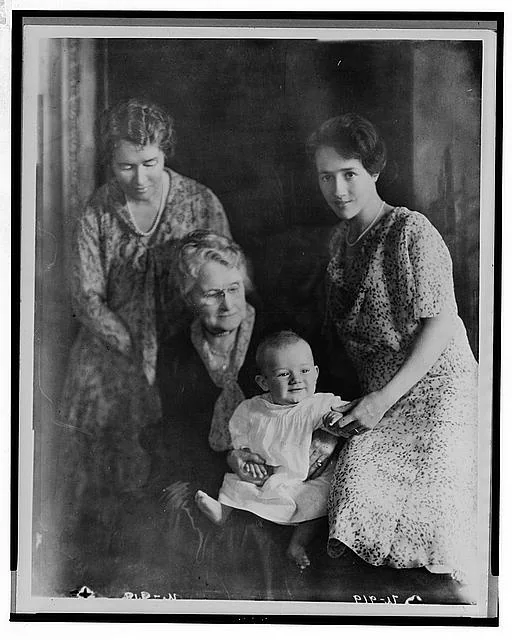
Charles Lindbergh Jr. with his mother and family

The family

Charles Jr. with his mother and earlier generations of his family

Recent developments

Latest updates

Recent reporting and official developments, labeled by source and verification status.

Media ReleasePodcast

May 19, 2026 · The Free Press

A six-part series re-examines the Lindbergh investigation

Joe Nocera and Poppy Damon launched The Lindbergh Conspiracies, revisiting the original evidence, the prosecution, and later alternative explanations. The series includes discussion of efforts to obtain DNA testing of preserved ransom material.

Listen to podcast →
The scale

The case in four numbers

20
months old
Charles Jr.'s age when abducted
$50,000
ransom paid
delivered on April 2, 1932
72
days until discovery
from the abduction to recovery of the remains
1935
year of conviction
affirmed by New Jersey's highest court

The course of the case

From the first letter to the verdict

Negotiations failed to return the child. The paid currency gave investigators a trail they could follow long after the initial searches ended.

See all 7 mapped locations →
  1. 01

    Mar 1, 1932

    The nursery is found empty

    Betty Gow found the nursery empty at about 10 p.m. A letter on the window sill demanded $50,000, and a damaged sectional ladder was found outside the house.

  2. 02

    Apr 2, 1932

    The family pays $50,000; the child is not returned

    Condon delivered $50,000 in the St. Raymond’s Cemetery area of the Bronx. The recipient gave him instructions claiming that the child was aboard a boat near Martha’s Vineyard.

  3. 03

    May 12, 1932

    William Allen finds the child's remains

    Allen discovered a child's remains in woodland near Mount Rose, roughly four and a half miles southeast of Highfields. The examination attributed death to head injuries and indicated death well before the ransom payment.

  4. 04

    Sep 19, 1934

    Police arrest Hauptmann outside his Bronx home

    Officers arrested Hauptmann after tracing the license plate written on a ransom certificate to his car. A ransom gold certificate was found on him.

  5. 05

    Jan 2, 1935

    The murder trial opens in Flemington

    Jury selection began at the historic courthouse under Justice Thomas Trenchard, with intense public and press attention. The state's case would combine the currency trail with physical comparisons and identifications.

  6. 06

    Feb 13, 1935

    The jury convicts Hauptmann of first-degree murder

    The jury returned a guilty verdict without a recommendation of life imprisonment, resulting in a death sentence. Hauptmann continued to deny guilt and pursued appellate review.

The prosecution's connections

Three strands carried the case

1
From the case record

Serial-number records connected spent and hidden currency to the ransom payment.

2
From the case record

Koehler's wood comparison connected a rail of the nursery ladder to Hauptmann's attic.

3
From the case record

Handwriting opinions and identifications supplied additional connections, with their reliability disputed by the defense.

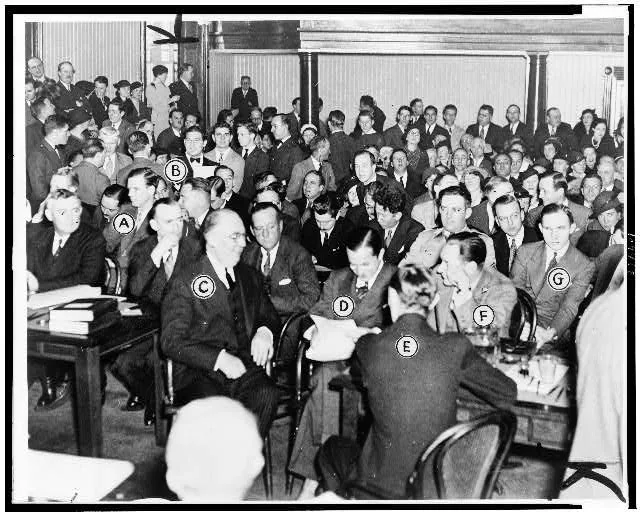
The courtroom from Justice Trenchard's bench, 1935
1935
The trial

The 1935 Flemington trial

The surviving trial record contains testimony, exhibits, defense objections and the instructions given to the jury.

Examine the case documents →

Go deeper

Choose your path through the case

This overview is the map. The case tabs hold the underlying events, people, media, locations, and source material.