TRUE CRIME ATLAS

Jack the Ripper

Published March 30, 2026Updated March 30, 2026
UnsolvedVisual case overview

Five canonical victims · disputed letters · no identified killer

The Whitechapel case beneath the legend

Five murders in Whitechapel form the commonly accepted core of the case. Disputed letters created the killer's famous name while the offender's identity remained unknown.

Read the full case overview

Jack the Ripper is the name given to the unidentified killer associated with the Whitechapel murders in London in 1888, including the later-designated 'canonical five' victims. The crimes, the taunting correspondence attributed to the killer, and the enduring uncertainty over the murderer's identity have made the case one of the world's most famous unsolved homicide investigations.

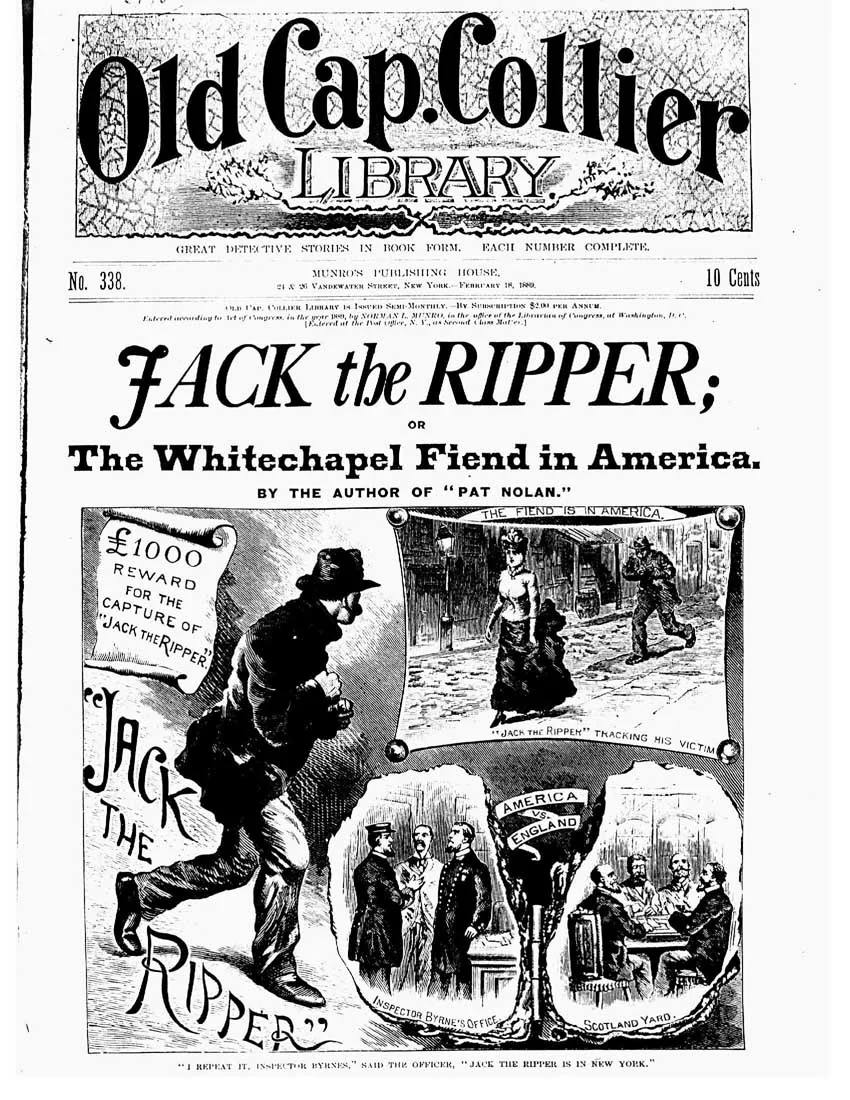
Jack the Ripper, Or, the Whitechapel Fiend in America (1889).jpg

Public mythology

An unresolved case became mass entertainment

The scale

The case in four numbers

5
canonical victims
in the commonly accepted series
10
mapped locations
across the published case file
3
famous letters
with disputed authenticity
1888
year of the core series
from Nichols through Kelly

The canonical sequence

Five murders define the strongest shared pattern

The accepted sequence runs from Mary Ann Nichols to Mary Jane Kelly. The same period also produced correspondence that shaped the name and mythology.

See all 10 mapped locations →
  1. 01

    Aug 31, 1888

    Murder of Mary Ann Nichols

    Mary Ann 'Polly' Nichols, 43, is considered the first canonical victim. Her throat was slit twice, and her abdomen was partially ripped open by a deep, jagged wound.

  2. 02

    Sep 8, 1888

    Murder of Annie Chapman

    Annie Chapman, 47, was found with her throat cut. Her abdomen was entirely laid open, and her uterus had been removed.

  3. 03

    Sep 27, 1888

    The 'Dear Boss' Letter Received

    The Central News Agency receives a letter, dated September 25, signed 'Jack the Ripper'. This is the first time the name is used. The author taunts the police and promises to 'clip the lady's ears off'.

  4. 04

    Sep 30, 1888

    The 'Double Event': Murder of Elizabeth Stride

    Elizabeth Stride, 44, was found with her throat cut but with no other mutilations. It is believed the killer was interrupted during the attack by the cart of Louis Diemschutz.

  5. 05

    Sep 30, 1888

    The 'Double Event': Murder of Catherine Eddowes

    Less than an hour after Stride's murder, Catherine Eddowes, 46, was found dead. Her throat was slit, and she was severely mutilated, with her left kidney and a major part of her uterus removed.

  6. 06

    Nov 9, 1888

    Murder of Mary Jane Kelly

    Mary Jane Kelly, around 25, was the final canonical victim. She was murdered indoors, allowing the killer an extended period of time for the most extensive mutilation of the series.

How the case is bounded

Pattern, correspondence, and caution

1
Strongly supported

The canonical Ripper series is generally treated as beginning with Mary Ann Nichols on August 31, 1888.

2
Strongly supported

Elizabeth Stride and Catherine Eddowes were killed on the same night, forming the event traditionally called the Double Event.

3
Supported

The Dear Boss letter introduced the name Jack the Ripper into the case record and public mythology.

4
Supported

The authenticity of the Ripper letters remains uncertain and should not be treated as uniformly reliable evidence.

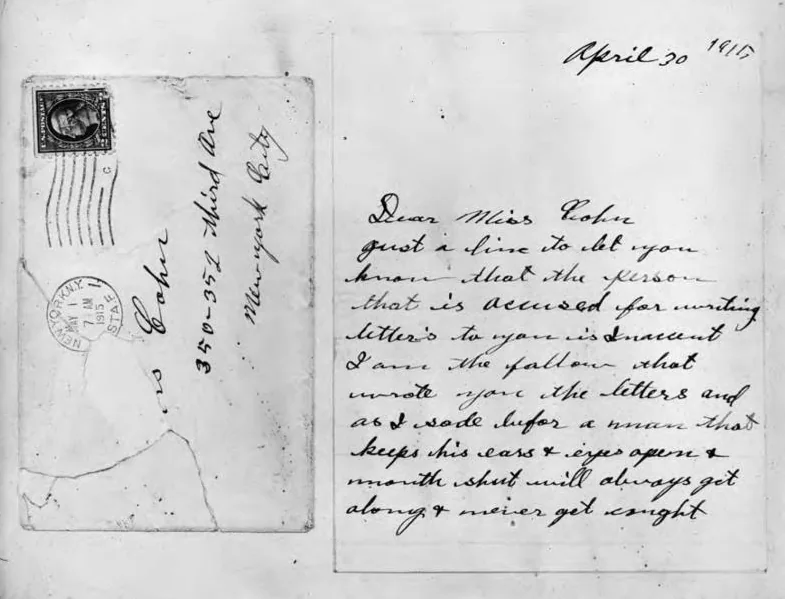
Jack the Ripper (NYC) letter.jpg
3
famous letters

Letters created the identity investigators inherited

The best-known correspondence shaped the killer's name and public mythology, even though its authenticity remains disputed.

Examine the correspondence imagery

Where certainty changes

Not every event carries the same weight

Open each layer to see what the archive treats as core, contested, or unresolved.

01EstablishedThe canonical five form the evidentiary core
Five murders in 1888 are most consistently treated as the shared series, though even within that set the circumstances differ.
02Disputed perimeterOther victims, letters, and DNA claims remain contested
Martha Tabram, several letters, and modern shawl-DNA claims lack the consensus attached to the canonical chronology.
03Open questionWho committed the Whitechapel murders?
No named suspect has achieved a publicly accepted identification supported by a decisive evidentiary record.

Go deeper

Choose your path through the case

This overview is the map. The case tabs hold the underlying events, people, media, locations, and source material.