1
Gaviota State Park Beachunsolved
Zodiac Killer
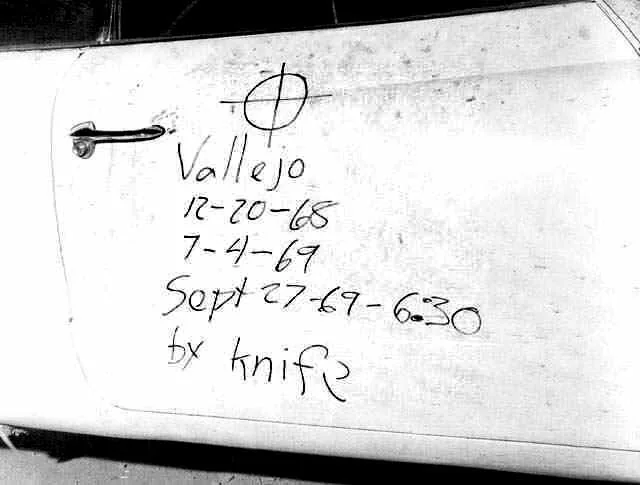
The Zodiac Killer case concerns unsolved attacks and taunting ciphers in Northern California between 1968 and 1969, one of America's most famous murder mysteries.
Curated Collection
Four Northern California cases that show how serial murder in the region ranged from taunting unsolved predator myths to highly physical outdoor hunting grounds and a late-1990s mobile torture partnership.
Viewed together, these four cases show that Northern California serial murder never had a single dominant pattern. The offender could be a cipher-writing phantom, a trail stalker, a predator focused on vulnerable hitchhikers, or a sadistic duo using a modified vehicle as a controlled crime scene.
The collection is unified less by one victim type or one modus operandi than by regional atmosphere: mobility, isolation, media amplification, and long-running debates about whether investigators were facing one offender, several offenders, or overlapping crime waves.
Follow the cases in this order to see the collection's shared patterns and important contrasts develop.
The Zodiac Killer case concerns unsolved attacks and taunting ciphers in Northern California between 1968 and 1969, one of America's most famous murder mysteries.
An unsolved Northern California serial-killer case involving young female hitchhikers whose bodies were found around Santa Rosa and Sonoma County between 1972 and 1973.

A Northern California serial-killer case centered on David Carpenter, whose attacks on hikers and trail users spanned Mount Tamalpais, Point Reyes, Santa Cruz County, and San Francisco between 1979 and 1981.

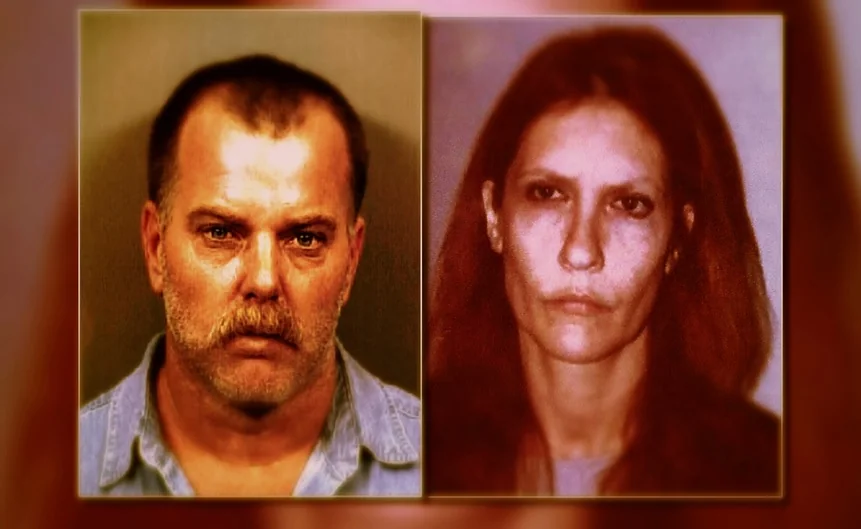
In 1997, James Daveggio and Michelle Michaud used a modified minivan to kidnap, torture, and murder victims in California and Nevada.
Similarities
Each case depends on movement rather than a fixed private killing space. Zodiac attacked drivers and couples in transit or semi-isolated public spaces, the Santa Rosa offender preyed on hitchhikers moving through regional road networks, David Carpenter used parks and trail systems as open-air hunting corridors, and Daveggio and Michaud turned a minivan into a mobile abduction chamber. Northern California's roads, recreation zones, and intercity movement are not just background; they are operational tools in every case.
The collection is tied together by situational vulnerability. Lovers' lanes, hitchhiking routes, hiking trails, and rides offered from a modified van are all spaces where ordinary routines briefly suspended protective social structure. These are not home-invasion or acquaintance-dominant cases; they are cases built on momentary access, surprise, and the offender's ability to control an encounter before help can arrive.
These crimes changed how people imagined ordinary landscapes. Zodiac made roadsides, parks, and commuter-adjacent spaces feel randomly penetrable. The Santa Rosa murders made hitchhiking corridors and rural dump sites feel predatory. Trailside turned celebrated outdoor spaces into stalking grounds. The Minivan Murders updated that fear for the late 1990s by showing that the threat could be carried directly to the victim inside an apparently ordinary vehicle.
The active periods are relatively compact, but the cultural and investigative afterlives are long. Zodiac's ciphers and suspects kept the case alive for decades. Santa Rosa remains unresolved because its missing crime scenes and uncertain linkages never produced closure. Trailside expanded through appeals and later DNA linkage. The Minivan Murders remained memorable because of the horrifying vehicle modifications and the pair-dynamic of the offenders. In each case, what happened after the murders helped define how the public remembers the crimes.
Differences
Zodiac's signature is communicative: letters, ciphers, calls, and self-mythology. The Santa Rosa murders are defined by ambiguity of linkage and the shared victim pattern more than one theatrical signature. Trailside is place-based, with the offender's identity bound to trails, parks, and outdoor predation. The Minivan Murders are the most mechanically controlled and sadistically explicit, with the customized van itself becoming a signature artifact.
Zodiac and Santa Rosa remain structurally open, which means public discourse is dominated by theories, suspect rotation, and retrospective pattern interpretation. Trailside and the Minivan Murders are legally closed, so their discourse shifts toward victim chronology, prosecutorial proof, offender psychology, and the mechanics of capture. That solved-versus-unsolved divide is one of the strongest interpretive differences in the set.
Zodiac is the purest phantom: famous, widely discussed, but still unidentified. Santa Rosa is a possible-series case where the offender may be one person, more than one person, or a partially coherent cluster. Trailside centers on a single identified offender whose chronology prosecutors stabilized through trials and appeals. The Minivan Murders stand apart because they are not a lone-predator case at all, but a cooperative killer-couple case in which planning, capture, and abuse were shared.
The late-1960s and early-1970s cases were constrained by weaker forensic baselines, fragmented information flow, and heavier reliance on witness memory and pattern reasoning. Trailside sits in a transitional moment where a major task-force hunt and later appellate record provide stronger structure. By the late 1990s, the Minivan case benefits from a more modern evidentiary environment and from the suspects' own elaborate preparations, which created a denser proof trail than the earlier unsolved cases ever produced.
Books associated with the cases in this collection, kept in the same sequence as the cases themselves.

Zodiac Killer
by Robert Graysmith
The defining popular Zodiac book and still the clearest default choice for readers who want the case's most influential narrative in one volume.
Best for readers who want the classic Zodiac book that shaped public understanding of the suspects and investigation.
As an Amazon Associate, True Crime Atlas may earn from qualifying purchases.

Santa Rosa Hitchhiker Murders
by Adrian Halden
It is a dedicated 2026 book-length treatment of the case rather than a passing chapter in a broader serial-killer survey.
Best for readers who want a current, victim-centered, case-specific book focused on chronology, investigative failures, and unresolved theories.
As an Amazon Associate, True Crime Atlas may earn from qualifying purchases.

Trailside Killer
by Robert Graysmith
It remains the signature book treatment of the case and is the work most often associated with the Trailside murders in public memory.
Best for readers who want the best-known single-volume narrative of the Carpenter investigation and prosecutions.
As an Amazon Associate, True Crime Atlas may earn from qualifying purchases.

Daveggio-Michaud Minivan Murders
A directly case-specific title focused on Michelle Michaud and James Daveggio, making it the clearest featured-book choice for this case.
Best for readers who want a book centered specifically on the Daveggio-Michaud minivan murders.
As an Amazon Associate, True Crime Atlas may earn from qualifying purchases.
A stronger cross-case view of how the attack setting, assailant structure, medical course, succession, and closure differed from one presidency to the next.
| Dimension | Zodiac Killer Gaviota State Park Beach | Santa Rosa Hitchhiker Murders Redwood Empire Ice Arena | Trailside Killer Lands End | Daveggio-Michaud Minivan Murders Pleasanton, California |
|---|---|---|---|---|
| Core Victim Profile | Couples and young adults in vehicles or outdoor social spaces | Teen girls and young women moving through hitchhiking routes | Hikers and isolated trail users in parks and open-space corridors | Women targeted for abduction, sexual torture, and murder by a pair using false-normal transportation |
| Primary Hunting Environment | Roadsides, lovers' lanes, parks, and urban-adjacent public spaces | Highway on-ramps, rural North Bay roads, and body-dump ravines | Trails, state parks, national seashore terrain, and recreational wilderness edges | A modified minivan operating across California and Nevada corridors |
| Case Identity | Unidentified offender defined by communications and ciphers | Unsolved probable-series case defined by victim pattern and uncertainty of linkage | Solved single-offender trail-predator case with later DNA expansion | Solved killer-couple case defined by captivity engineering and forensic preparation |
| Public Afterlife | Infinite suspect churn, cipher obsession, and pop-culture permanence | Cold-case dread, suspect speculation, and recurring 'was it one killer?' debate | Strong historical identity as a named predator with enduring interest in geography and prosecution | Shock value centered on the van, the couple dynamic, and the deliberate torture setup |
| Investigative Closure | No formal closure; the offender remains unidentified | No formal closure; victim links and suspect theories remain contested | High legal closure through arrest, convictions, appeals, and later forensic reinforcement | High legal closure through arrest, trial, and conviction of both offenders |