TRUE CRIME ATLAS

Zodiac Killer

Published February 21, 2026Updated March 26, 2026
UnsolvedVisual case overview

Four attacks · one claimed identity · no resolution

The Zodiac case, decoded

Four attacks and authenticated communications define the core Zodiac case. Ciphers and letters established a public identity without revealing the person behind it.

Read the full case overview

The Zodiac Killer case concerns a string of confirmed attacks in Northern California in the late 1960s, including the murders of five victims, along with a campaign of letters and ciphers sent to police and the press. Some of the ciphers were decoded decades later, but the killer's identity has never been established, keeping the case among America's most famous unsolved homicide investigations.

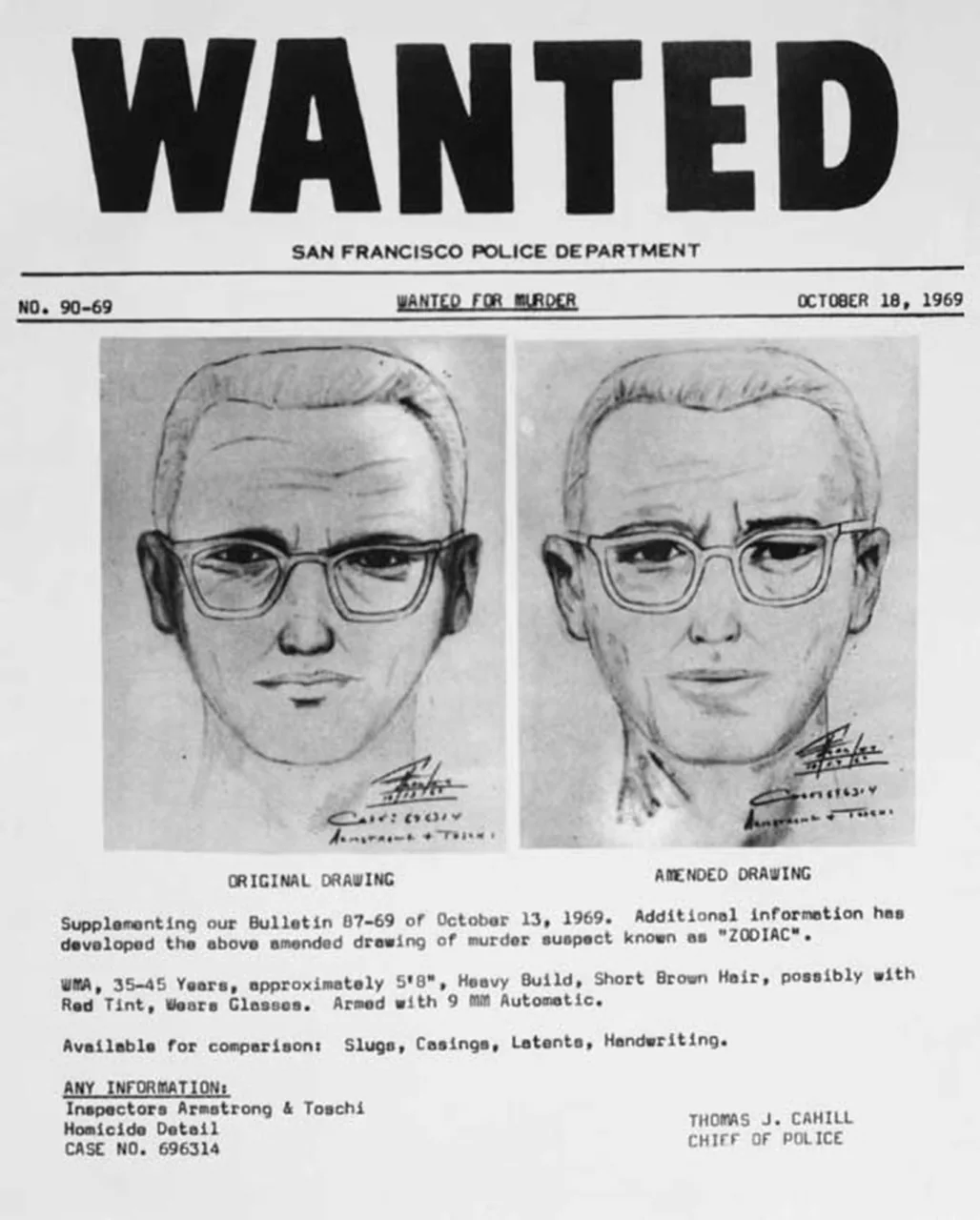
Official Wanted Poster (1969)

Public image

A face seen, never identified

The scale

The case in four numbers

4
canonical attacks
between 1968 and 1969
5
people killed
in the confirmed series
2
survivors
from separate attacks
5
theories mapped
with confidence and sources

Narrative spine

Four attacks established the core case

The sequence changes in setting and method. Communications after the attacks are what bind much of it together.

See all 13 mapped locations →
  1. 01

    Dec 20, 1968

    Lake Herman Road Double Homicide

    On a remote lovers' lane, David Faraday (17) and Betty Lou Jensen (16) were shot by a stranger with a .22 semiautomatic pistol; Faraday died of a contact shot to the head, Jensen was shot five times in the back.

  2. 02

    Jul 5, 1969

    Blue Rock Springs Park Shooting

    Just before midnight on July 4, an assailant shot into a Corvair, wounding Michael Mageau (19) and killing Darlene Ferrin (22) with a 9 mm handgun.

  3. 03

    Sep 28, 1969

    Lake Berryessa Stabbings

    College students Bryan Hartnell (20) and Cecelia Shepard (22) were ambushed by a hooded assailant who bound them and stabbed each repeatedly; Shepard died two days later, Hartnell survived.

  4. 04

    Oct 12, 1969

    Murder of Paul Stine

    Taxi driver Paul Stine (29) was shot once in the head by a passenger in Presidio Heights, and the killer removed a piece of Stine's shirt that he later mailed to the press.

How the case connects

The authentication chain

1
Strongly supported

After the Blue Rock Springs shooting, a caller directed police to the crime and claimed responsibility for that attack and the Lake Herman Road murders.

2
Strongly supported

At Lake Berryessa, the attacker left a message on Bryan Hartnell’s car door listing prior attack dates and linking the stabbing to the Zodiac series.

3
Strongly supported

The October 13, 1969 letter included a piece of Paul Stine’s shirt, strongly authenticating the writer’s connection to the Stine murder.

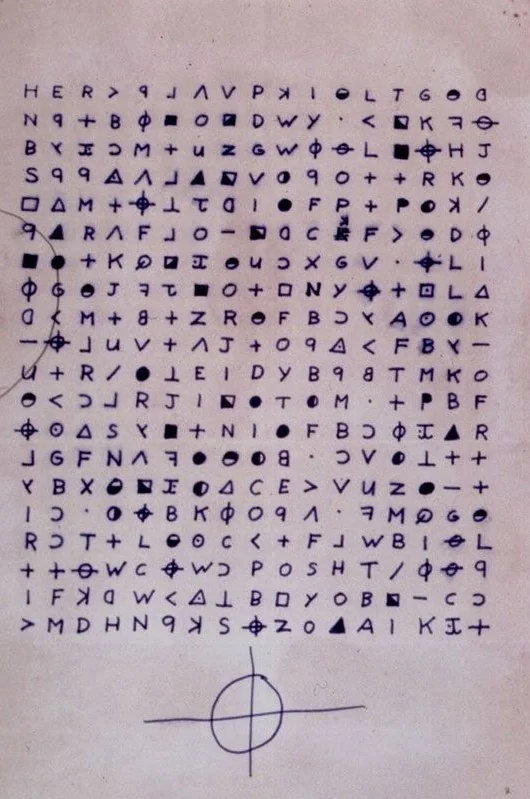
Dripping Pen Card & 340-Symbol Cipher (Z-340)
340
cipher symbols

A cipher solved. An identity untouched.

The Z-340 was decoded after 51 years, but its solution did not name the killer.

Explore documents and ciphers

Where certainty changes

Not every event carries the same weight

Open each layer to see what the archive treats as core, contested, or unresolved.

01Core caseThe canonical attacks and authenticated communications
The Lake Herman Road, Blue Rock Springs, Lake Berryessa, and Paul Stine attacks form the strongest shared sequence. Calls, messages, and crime-specific material connect the offender to multiple scenes.
02Disputed perimeterEarlier crimes and later communications
The Cheri Jo Bates and Domingos-Edwards murders are often examined alongside the case, but they lack the same authentication pattern as the canonical sequence. Later letters and calls also vary in credibility.
03Open questionWho was behind the Zodiac identity?
Arthur Leigh Allen remains the best-known named suspect, yet the public record represented here contains no decisive forensic identification, charge, or conviction resolving the case.

Go deeper

Choose your path through the case

This overview is the map. The case tabs hold the underlying events, people, media, locations, and source material.